Skip to content
Français Current language : English
Start my project
Combat sports

Our worlds

Combat sports

Boxing, MMA, judo, BJJ, karate, taekwondo, kickboxing, wrestling: eight disciplines, eight relationships to the floor and to space. We design, build and install the gyms that suit them.

Our worlds

Here, safety is not a finish

Combat sports are set apart by what happens when something gives way. A cage anchor, a bag fixing, a badly joined tatami: the failure is not paid for in inconvenience but in injury, immediately, to a body in motion. That is why we settle safety clearances, floors and fixings on the drawing, with a calculation, rather than on site with a spirit level.

These eight disciplines do not share the same relationship to the floor, and that is a project's first trade-off. Judo, BJJ and wrestling throw and fall: they need strong absorption and a continuous surface. Boxing, kickboxing, karate and taekwondo strike standing: they need stable footing, a surface that neither grips nor slides under a pivoting foot, and far less thickness. MMA combines both. A gym hosting several of these must therefore arbitrate, zone by zone.

The second trade-off is height, and it catches people out more often than you would think. A bag rig, a raised cage, a wrestling lift or a high taekwondo kick occupy a volume a converted office unit does not always offer. The survey measures usable height - under the roof structure, under the services and under the light fittings - and it is the lowest that governs. That stage is part of our sports facility design.

Then comes what the catalogue does not cover, and in this world that is frequent: a cage sized exactly to a floor, a free-standing ring because the slab cannot be drilled, padding cut to an irregular room. Those parts are drawn - see product design - then produced in our workshop, which is bespoke manufacture. Where the layout is open to debate, a 3D visualisation lets you check clearances and seating before ordering.

Installation is carried out by our own teams: erection, levelling, rope or mesh tensioning, mats and wall padding fitted, checks before use - see installation. And checking continues afterwards: rope tension, mesh condition, fixings, mats and padding are inspected periodically, because this is where maintenance has the most direct consequences.

A combat gym often shares its building with other uses: a conditioning floor, which we cover on the fitness and cross-training page, or a multi-purpose hall hosting martial arts sessions, see multi-sport spaces.

Turnkey

From concept to completion.

  1. Design

    Needs assessment and 3D modelling of the space.

  2. Equip

    Brands and equipment chosen to fit the brief.

  3. Install

    Fitted and commissioned by our own teams.

  4. Maintain

    Servicing and upkeep, built to last.

Discipline by discipline

The eight disciplines in detail

Boxing

Boxing

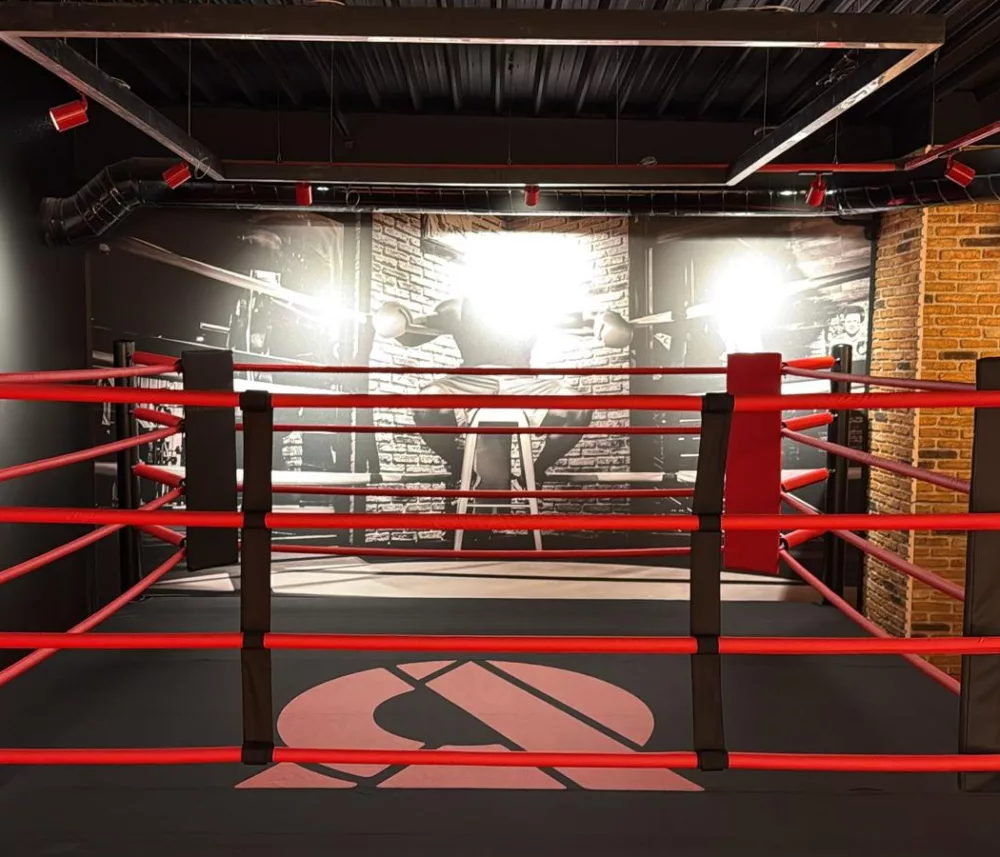
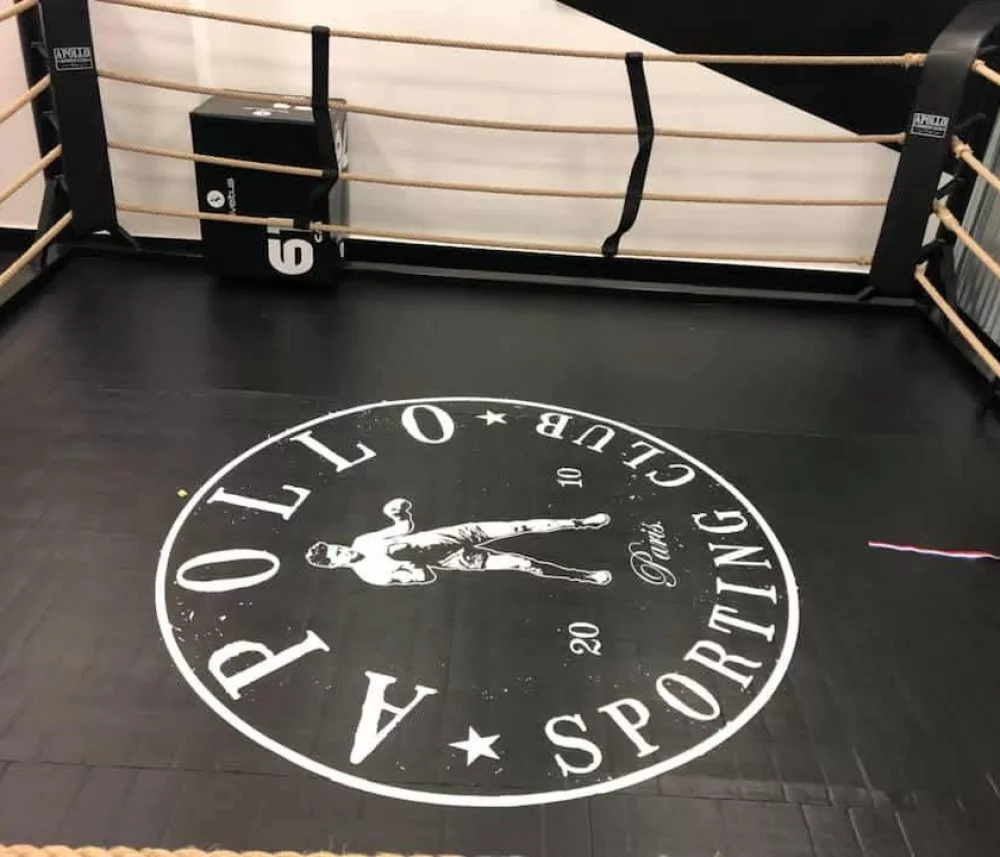
A turnkey boxing gym fit-out is organised around three zones: the ring, the bags, and the floor area for movement. A conventional boxing ring anchors to the slab, which means being able to drill it and knowing what it is made of. Where that is not possible - leased premises, raised floor, underfloor heating, listed building - a free-standing boxing ring carries the loads on its own frame and comes apart without leaving a mark.

Erecting a ring is not just assembling it: it takes levelling, rope tensioning, corner and post padding, and checking the tension of the canvas, which must be firm without being hard. A ring put up too quickly shows within one session: the ropes slacken in a few weeks and the whole thing works loose. As boxing ring installers we hand over an assembly that is set and checked, not merely bolted together. See our installation page for that stage.

The punch bag rig is the other structural point. A sixty-kilo bag swinging is not a resting load: it works a purlin dynamically, with leverage. We check the load path before drilling, and propose a free-standing rig where the roof structure will not take it. It is a part we regularly build to measure, to the height and grid of the unit.

On the floor, boxing puzzle mats cover the movement and warm-up zones: interlocking tiles, density suited to standing use, joints properly dealt with. Puzzle matting has the advantage of coming apart and being replaced tile by tile, which matters in a busy gym where wear is never uniform.
MMA

MMA

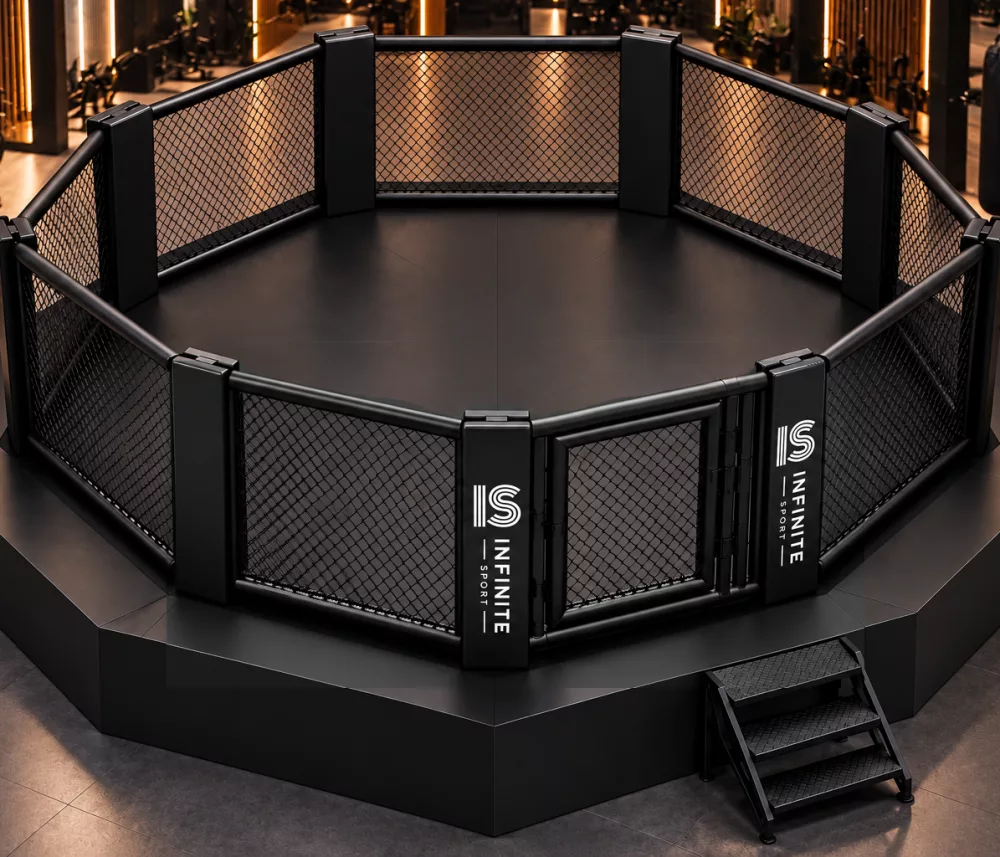
MMA gym design combines the constraints of stand-up striking and ground work, and it is that combination that makes it particular. The cage is the centrepiece, and the first choice is its level: a floor-level MMA cage sits within an existing floor without a platform and needs less height; a raised cage serves competition and spectators but demands volume and access many units do not have.

A standard-format MMA cage rarely fits an existing unit without compromise. We therefore size it on the actual floor: diameter, mesh height, gate position according to circulation, anchor points according to the slab. It is a typical case of bespoke product design, followed by workshop manufacture with assembly marks.

Installing an MMA cage turns on levelling and mesh tension. Slack mesh forms a pocket that traps an arm; over-tensioned mesh breaks its fixings. Between the two lies a narrow band, reached during erection and checked periodically thereafter. See installation and maintenance.

MMA wall padding and protection complete the picture: they go where bodies actually land, which is at corners, at columns and at the foot of the wall - the three points people forget. We cut them to the room rather than butting standard panels together, because it is the gaps between two panels that cause injury.

Judo

Judo

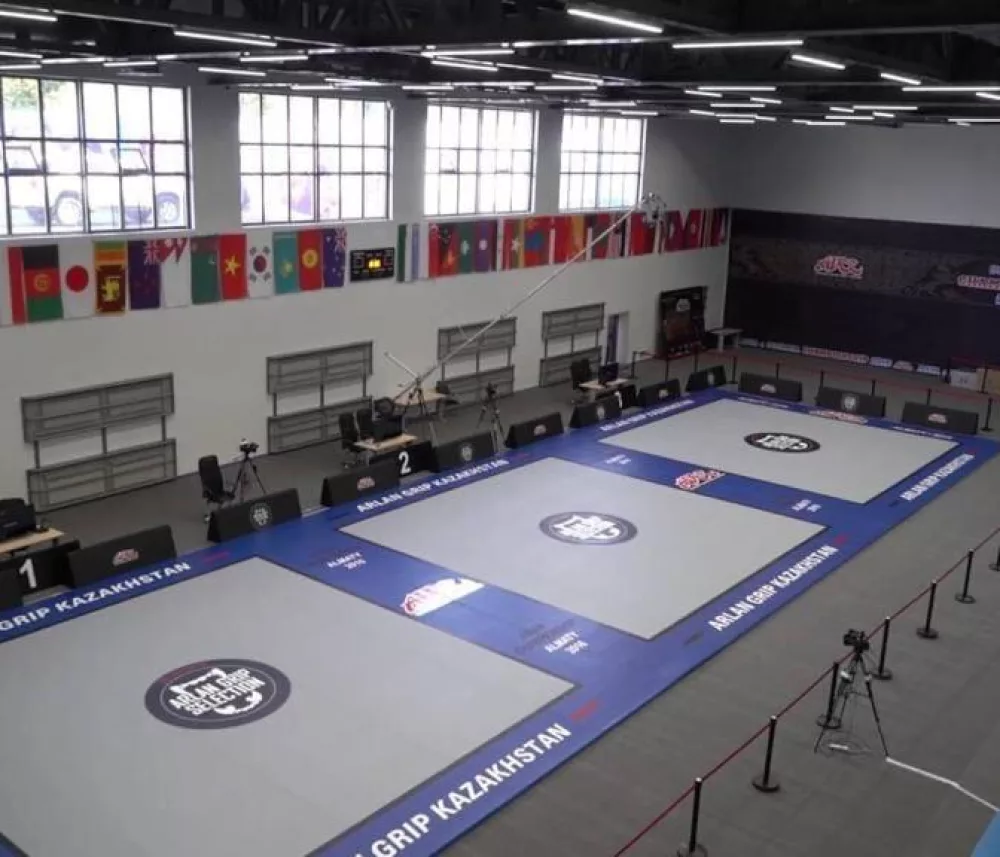
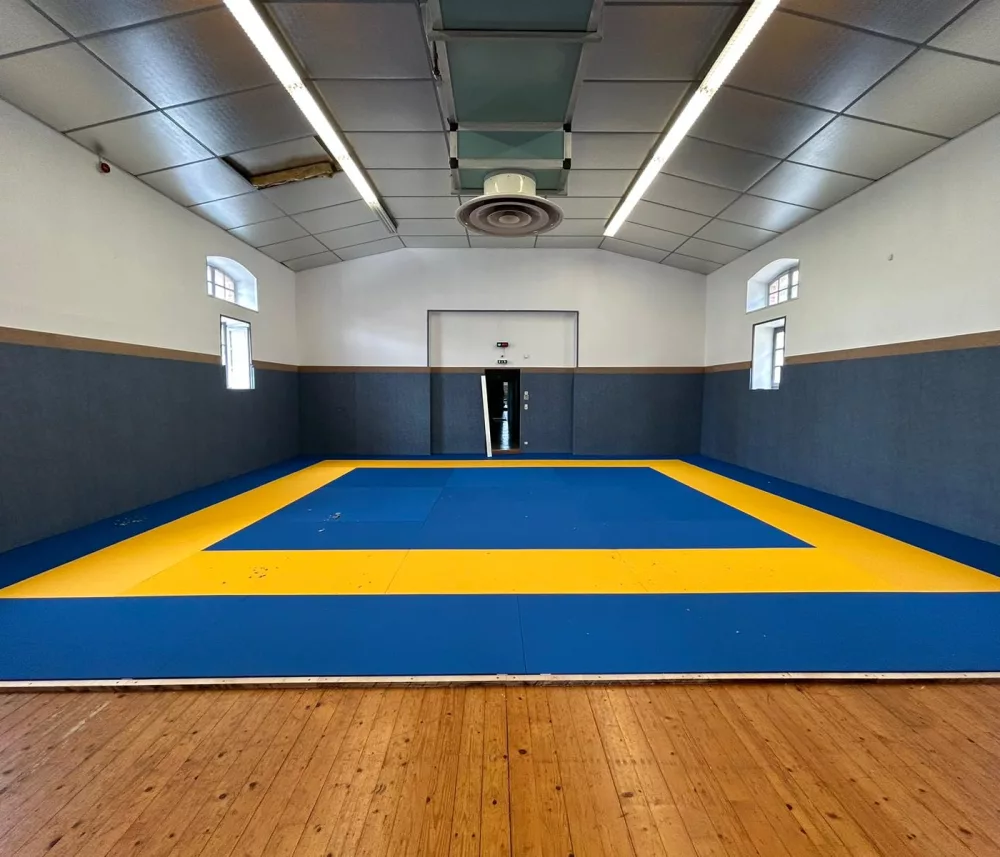
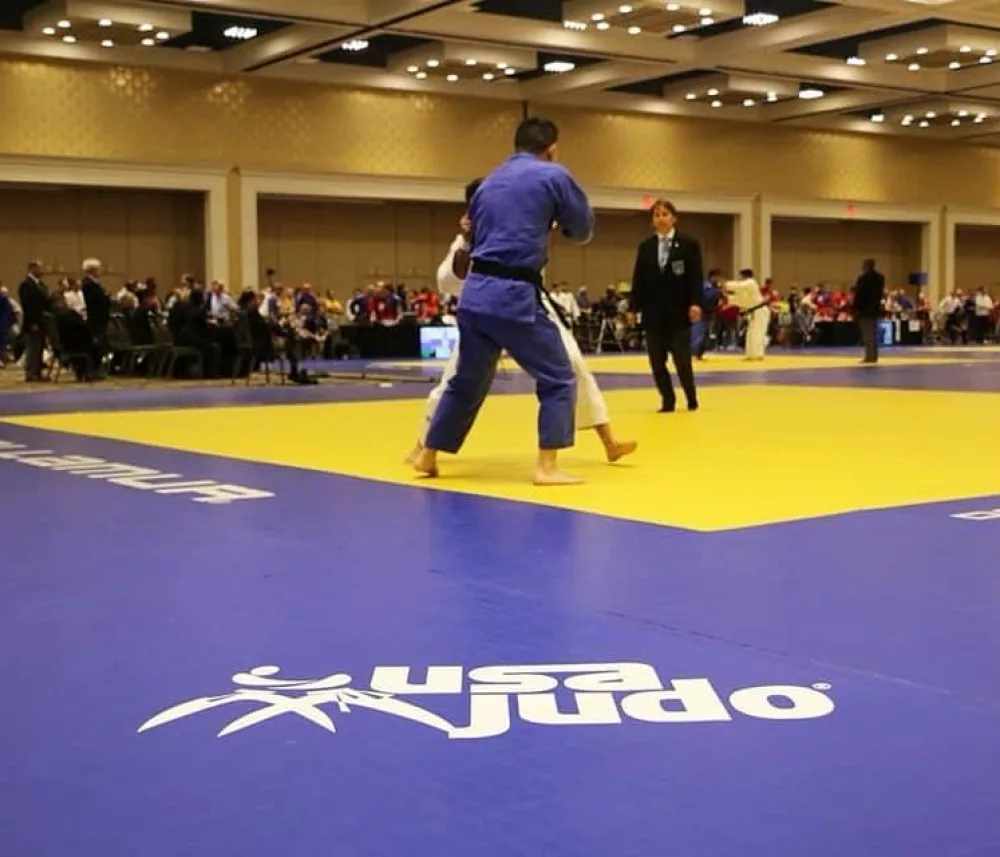
Judo demands the most exacting absorption of the eight, because throwing is the rule rather than the exception. Judo tatami has to absorb a whole body falling from shoulder height, hundreds of times a session, while staying firm enough that footing does not sink - matting that is too soft injures ankles as surely as matting that is too hard injures backs.

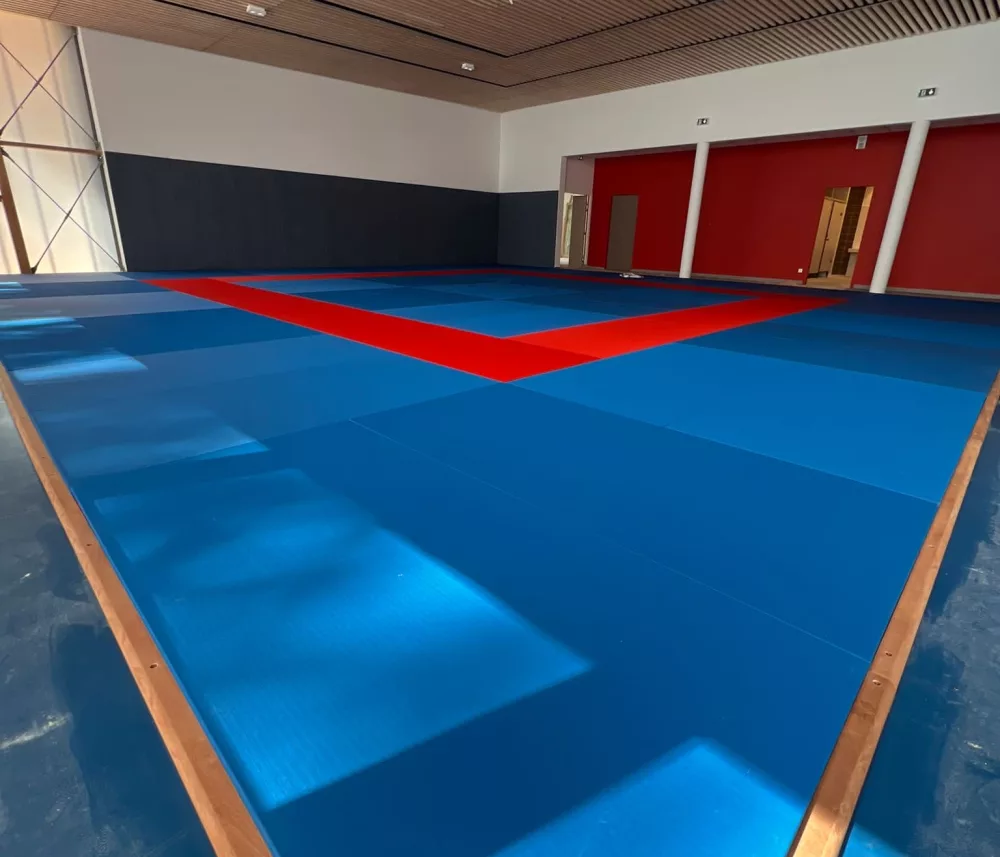
The surface must be continuous and stable: tatami that works loose during randori creates an edge, and the edge is what injures. We lay either interlocking tiles with bevelled edging, or on a recessed system where the dojo is built for it, the latter giving the best comfort but requiring a recess in the slab from the structural stage.

Bespoke dojo design also covers what surrounds the mat: a bowing area at the entrance, a changing room that lets people change before stepping onto the tatami, and storage for mobile matting if the hall is shared. The discipline has its customs, and a dojo that ignores them is a dojo nobody inhabits. That dimension is dealt with from the space design stage.

Brazilian jiu-jitsu

Brazilian jiu-jitsu

BJJ shares judo's tatami but uses it differently: fewer falls from height, far more time spent on the ground, and a much higher density of practitioners per square metre. That changes two concrete things: absorption can be slightly lower than for judo, but abrasion resistance and surface hygiene become decisive.

Martial arts matting intended for BJJ is therefore chosen on its surface: a grain that does not burn skin during ground movement, a material that genuinely cleans and withstands daily disinfectant. It is an operational question as much as a comfort one, and it governs a gym's attendance in the medium term.

Bespoke dojo design for BJJ favours a continuous surface and peripheral clearance: ground fighting drifts, and a buffer zone between mat and wall prevents hard contact. We size that zone according to the number of pairs training at once, a figure only you know.

Karate

Karate

Karate is practised standing, on footing and pivots, and its demand on the floor is almost the opposite of judo's. It needs a firm surface that does not sink under footing and allows the foot to rotate without gripping or sliding. Thick judo tatami is uncomfortable and tiring for it: practitioners say so immediately.

The surface is therefore chosen on density rather than thickness, favouring high-density martial arts matting, or a firm sports surface where the hall is shared. In a hall split between karate and judo the compromise is real: we state it plainly rather than gloss over it, with the option of a removable zone where the timetable allows.

Space is sized on kata as much as on kumite: a practitioner performing kata occupies far more area than a fighter, and the hall is sized on the more demanding of the two. Bespoke dojo design for karate also allows for mirrors, useful for technical work, and a clear wall for lining up. See space design.

Taekwondo

Taekwondo

Taekwondo stands out for height: high kicks, jumps and spinning techniques occupy a volume many converted halls do not offer. Clear height is therefore the first criterion, before the floor, and it is what we measure first during the survey.

On the floor, the sport combines dynamic footing with falls from low height: medium-density martial arts matting in interlocking tiles generally answers well. As the competition area is defined by colour, we mark or lay the zones in the regulation shades where the hall hosts gradings or competitions.

Peripheral equipment matters as much as the floor: pads and paddles need storing, electronic chest guards need sockets and a charging point, and wall padding goes higher than in judo, precisely because of the high techniques. Bespoke dojo design for taekwondo takes those three points into account, none of which appears in any catalogue.

Kickboxing

Kickboxing

Kickboxing takes its zoning from boxing and its floor from karate: a ring or a marked area, bags, and a firm surface allowing footing and pivots. It shares a hall well with English boxing, which makes it a good candidate for mixed gyms - provided the floor is chosen for both.

Striking equipment is more varied than in boxing: long bags for low kicks, heavy bags, free-standing bags, pads and shields. The bag rig must therefore allow different hanging heights and wider spacing, because a roundhouse kick sweeps a path a hook does not. We size the rig on actual use, and build it to the grid of the unit where nothing standard fits.

Wall padding goes both lower and higher than in boxing, to cover low kicks and high techniques alike. As always it is corners and columns that need the attention: a well-fitted flat panel is worth nothing if the adjacent corner is left bare.

Wrestling

Wrestling

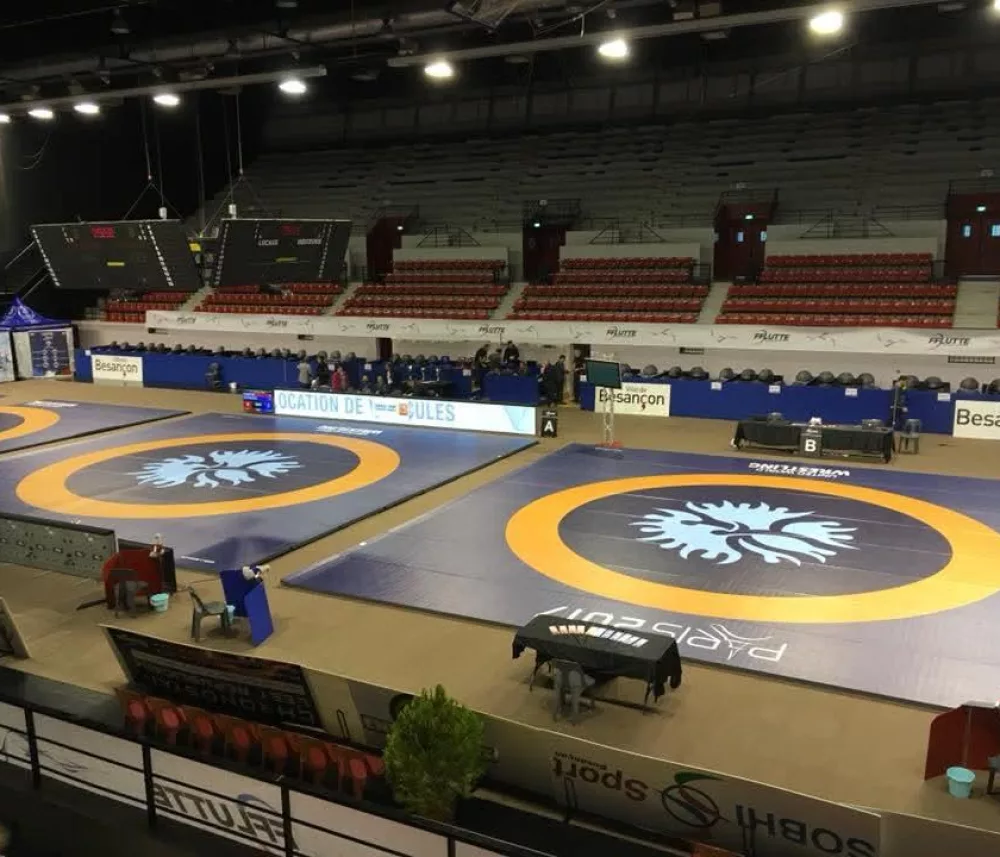
Wrestling is, with judo, the most demanding discipline for absorption: throws, lifts and whole-body falls, at continuous intensity. A wrestling mat is traditionally in one piece, high-density foam under a tensioned cover, and that continuity is not a detail - it removes the joints, and therefore the edges and the trip hazards.

The tensioned cover requires a perimeter tensioning system and specific upkeep: it is cleaned daily and re-tensioned periodically. It is equipment whose operation matters as much as its installation, and we set out the protocol on handover rather than leaving it to be discovered.

On layout, the central circle and passivity zones are marked on the cover at regulation dimensions, and a clear protection zone must be kept around it. Bespoke dojo design for wrestling allows for storage: a rolled wrestling mat takes up considerable volume, and a shared hall must have decided where it goes between sessions. See space design for that stage.

Good to know

Frequently asked questions

Floor-level MMA cage or raised platform cage: which is right for your gym?

A floor-level MMA cage fits easily into a training area and makes interaction between athletes and coaches easier. It creates a dedicated zone for technical work, footwork and live sparring.

A cage on a raised platform puts the MMA area centre stage and gives spectators a far better view. It showcases a dedicated gym just as well as it does events.

We help you choose the model, dimensions and finishes to suit your space and your ambitions.

What are the advantages of a free-standing boxing ring?

A free-standing boxing ring has its own independent structure, which supports the posts and ropes. This design gives you great freedom in positioning and makes it easy to integrate into your gym.

It is a particularly good option for shared spaces, leased premises and projects whose layout may change over time. Its dimensions and customisation options let you create a boxing area that reflects your club.

How do you choose a frame for your punch bags?

The right frame depends on the available ceiling height, the number of bags, their size and the way your sessions are organised.

A free-standing structure creates a dedicated striking zone, positioned to suit your gym. Wall-mounted or ceiling-hung fixings offer other ways to make the most of the space, depending on the building.

We work with you to find the configuration best suited to comfortable use, smooth circulation and a wide variety of exercises.

How do you fit out a gym for several combat sports?

A single gym can host several disciplines with the right choice of flooring and a coherent layout.

Traditional tatami, interlocking puzzle mats and roll-out mats each have their strengths depending on the discipline: break-fall comfort, footing, flexibility or easy storage. Dedicated zones or removable surfaces also let you adapt the room to different classes.

We design a layout with you that does justice to each discipline and makes everyday use of your space easier.

How do you choose equipment for training and competition?

Equipment choice depends on the disciplines practised, the level of your members and your programme of activities.

For projects hosting competitions, dimensions, safety zones and equipment specifications are studied in line with the requirements of the relevant federation and the level of the event.

Infinite Sport helps you select the right products for your use and integrate them into your gym.

How do you maintain your gym equipment?

Regular maintenance preserves the quality of your equipment, training comfort and the appearance of your gym.

Cleaning the flooring, checking fixings, adjusting the ropes and inspecting the wall padding are scheduled according to the manufacturers' recommendations and how often the equipment is used.

We advise you on the maintenance routines and inspection points specific to your equipment, to help it last.

What budget should you plan to equip a combat sports gym?

Your budget depends on the area to be fitted out, the disciplines offered and the equipment required: sports flooring, rings, MMA cages, punch bags, mounting structures and accessories.

We draw up a detailed proposal tailored to your priorities and your budget. Your choices of dimensions, finishes and customisation let you build a gym that fits your project.

The fit-out can also be carried out in phases to support the growth of your business.

How long will your project take?

The timeline depends on the equipment selected, any customisation and the installation planned.

As soon as your project is defined, we confirm lead times for availability or manufacturing, delivery and installation. This visibility lets you plan your fit-out and prepare to welcome your members.

A combat sports space that reflects your club

Tell us about your disciplines, your premises and your ambitions. Infinite Sport supports you in designing and equipping a space built for your members, your identity and the growth of your club.